Most couples start venue shopping by looking at style, price, and guest count… and that makes sense.
But once the wedding day is actually happening, the things that shape the experience are often the ones that are easiest to miss on a tour like how far guests have to walk, whether there’s natural shade, what happens if it rains, how the spaces connect, whether the reception room gets uncomfortably hot, and whether the day feels cohesive from one part to the next.
Those are the details that don’t always stand out in the moment… but they’re the ones that tend to matter the most.
And while your wedding day is centered around your relationship and the experience you want to create for yourselves, it’s also a day your guests will be part of from beginning to end.
The most memorable weddings tend to strike a balance between the two…creating something that feels personal and meaningful to you, while also being thoughtful and comfortable for the people sharing it with you.
TL;DR:
A beautiful venue isn’t enough. The right one supports the experience of your entire day, from guest comfort to how smoothly everything runs behind the scenes. Pay attention to flow, layout, and how the space functions in real conditions, not just how it looks on a tour.
Once you start looking at venues this way, it becomes much easier knowing how to choose a wedding venue you and your guests will love.
Table of contents
- Most couples start venue shopping by looking at style, price, and guest count… and that makes sense.
- Start with the basics (because they do matter)
- Pay attention to how guests move through the space
- Think about guest comfort in real conditions (not just on tour day)
- Make sure the space feels cohesive, not pieced together
- If the space needs to be flipped, your timeline will revolve around it
- Look beyond the ceremony site
- Consider how the venue supports your vendor team
- Have a clear plan for weather (even if you don’t think you’ll need it)
- What’s included… and what isn’t?
- A few questions to ask before you book
- Final thoughts on How to Choose a Wedding Venue
Start with the basics (because they do matter)
Before getting into the details most couples don’t always think about, it’s important to start with the things that will naturally help you narrow down your options.
Your budget will set realistic expectations and the guest count will determine which venues can comfortably accommodate your day. And your overall style will guide you toward spaces that already align with your style, whether that’s a vineyard, estate, garden, country club, ballroom, or something more modern like urban warehouses, restored sugar cane factories, or rooftop terraces.
These are the filters that help you build your initial list… and they matter.
But once the wedding day actually arrives, the things that shape your experience (and your guests’ experience) often have very little to do with how the venue looked in photos… and everything to do with how it functions in real life.
Because a venue isn’t just a backdrop. It’s the foundation for how your entire day flows.
The better question to ask: how will the day actually feel here?
Once you’ve narrowed down your options based on budget, guest count, and overall style, the next step isn’t just choosing your favorite…
It’s stepping back and asking a different question.
Not “Which one do we love the look of most?”
But “Which one will actually feel the best for our wedding?”
Because the truth is, a venue can check every box on paper and still feel hectic, unorganized, inconvenient, and disconnected once everything is in motion if not planned out thoughtfully.
And that usually comes down to the details that are easy to overlook during a tour.
Things like:
- how guests move from one space to another (arrival, to ceremony, to cocktail hour, to reception)
- whether there’s a natural flow between each part of the day (is the dance floor separated from the dining area?)
- how comfortable the environment will feel once it’s filled with the people you love (does the venue have temperature control?)
- whether the timeline feels relaxed… or tight and rushed (will you be able to use the ceremony space afterwards, or will the area need to be cleared out to flip the room for your reception?)
- how everything connects from getting ready to the final song
These aren’t the things most people notice right away.
But they’re the things that shape how the day actually unfolds…for you, your guests, and your vendor team.
When a venue is designed in a way that supports the flow of the day, everything feels easier. Transitions happen naturally. Guests aren’t confused about where to go next. Vendors can do their jobs without feeling rushed or restricted. And you’re not constantly being pulled in different directions trying to make everything fit.
On the other hand, when the layout or logistics are working against you, it can create small points of friction throughout the day, tight timelines, long transitions, limited access to certain spaces, which can quietly add stress.
Not enough to ruin the day… but enough to change how it feels in the moment or the photos you imagined having captured.
That’s why this part of the decision matters so much.
You’re not just choosing a beautiful place to get married…you’re choosing the environment that your entire day will live in.

Pay attention to how guests move through the space
Once you start thinking about how the day will actually feel, one of the easiest ways to evaluate a venue is to walk through it step by step… just like your guests would.
From the moment they arrive to the moment they leave, how easy is it to move from one part of the day to the next?
Think through it in real time:
- Where are guests parking?
- How far is the walk to the ceremony?
- What happens immediately after the ceremony ends?
- Is it obvious where they’re supposed to go next?
- How far are the bathrooms from each space?
- Is it handicap accessible and/or friendly?
These are the kinds of things that can make a big difference once the day is actually happening.
For example, a venue might have a beautiful ceremony site tucked away in a garden, but if it’s a longer walk from parking or bathrooms, that’s something guests will feel. Especially in heels, in the heat, or for anyone who needs a little more time to get around. Also consider if shuttles will be needed to get guests to and from the venue.
Or maybe cocktail hour is in a completely different area, and guests need direction to get there. If the transition isn’t clear, people can end up lingering, confused, or unsure of where to go next.
None of these things are deal breakers on their own… but they do shape the overall experience.
When a venue is set up to flow well, everything feels intuitive. Guests move naturally from one space to the next without needing much direction. There’s a rhythm to the day that just works.
When it doesn’t, those small moments start to add up….long walks, unclear transitions, or feeling like you’re constantly moving from one place to another.
As you tour venues, try to picture the day from your guests’ perspective, not just your own.
Because when the flow feels easy for them, it usually feels easier for you too.
Think about guest comfort in real conditions (not just on tour day)

One of the biggest things couples don’t always realize when touring venues is how different the space can feel on their actual wedding day.
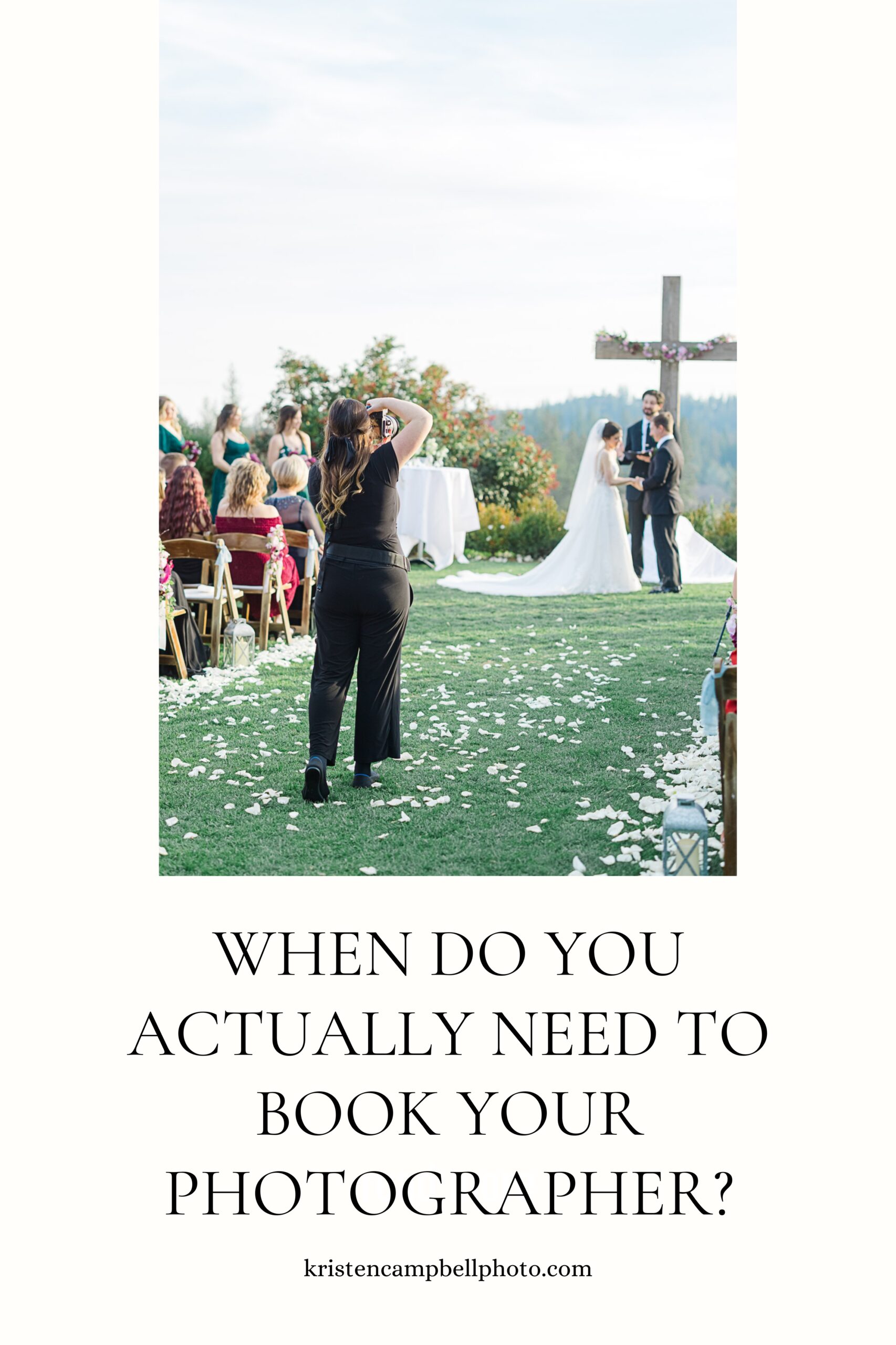
The tour might be on a mild, quiet afternoon… with no guests, no timeline pressure, and no real sense of how the space holds up once everything is in motion. Like, if the area is fully shaded during touring, and half of the guests are in the full sun during the ceremony as pictured above.
Your wedding day will feel very different.
Start thinking about what that environment will be like when it’s full and in use:
- Will guests have access to natural shade during the ceremony?
- If it’s warm, is there airflow or will it feel still and hot?
- If it’s cooler, are heaters available or will you need to bring them in?
- Does the reception space have proper heating or air conditioning?
- What does the space feel like once it’s full and body heat builds up?
Even small details, like wind, direct sun, or lack of shade, will shift how comfortable guests feel, especially during longer parts of the day like the ceremony or dinner.
Seasons play a role too.
A venue that is lush and green during one time of year might look completely different a few months later. Some spaces are beautiful year-round, while others rely heavily on the season to create that look (i.e. vineyards, gardens, etc.)
And then there are the things you might not notice right away… like bugs in certain areas during warmer months, or how exposed a space feels once the sun starts to set.
None of this is meant to make you second guess your choices, it’s simply about being aware of what to expect so you can plan accordingly.
Sometimes that means adding shade, bringing in heaters, or adjusting your ceremony timing. Other times, it just means choosing a space that naturally supports the kind of experience you want for yourself and your guests.
Make sure the space feels cohesive, not pieced together
Many venues offer multiple areas for different parts of the day… and on the surface, that can feel like a huge plus.
You might have more options for:
- a ceremony site
- a separate cocktail hour space
- a reception area
- getting ready locations
Having that flexibility can be great.
But it’s worth taking a step back and looking at how all of those spaces connect as a whole.
Do they feel like they belong together… or do they feel like completely different environments?
For example, one area might have a more European garden feel, while another leans more Spanish or modern. Individually, each space might be beautiful, but when you move through them all in one day, it can start to feel less cohesive.
Almost like stepping into a different venue each time you transition.
That doesn’t mean it won’t work, it just means you’ll want to be more intentional about how you use the space.
Sometimes that looks like:
- choosing the areas that feel most aligned with each other
- simplifying where possible instead of using every available option
- or designing the details in a way that ties everything together
The goal isn’t perfection… it’s consistency.
It’s a small detail, but one that can make a big difference in how everything comes together.
If the space needs to be flipped, your timeline will revolve around it
Some venues use the same space for multiple parts of the day, like hosting both the ceremony and reception in one location.
On paper, this can sound like a great use of space. It keeps everything in one area and can feel simple and streamlined.
But in reality, it usually means the venue needs a set amount of time to reset that space between events.
This is what’s often referred to as a “flip.”
During that time, the venue team is moving chairs, bringing in tables, setting linens, adjusting décor, and preparing everything for the next part of the day. And while that’s happening, the space is completely unavailable.
What many couples don’t realize is how much this one detail can shape the entire timeline.
For example, I have a wedding coming up where the venue requires 90 minutes to flip the ceremony space, and once the ceremony ends, guests have about 15 minutes to clear the area so the venue’s team can begin.
The couple isn’t doing a first look… which means there’s limited time for portraits before the ceremony. And 15 minutes afterward simply isn’t enough time for full family photos, wedding party portraits, and time together as a couple in that space.
So instead of using the ceremony area after the fact like they originally imagined, the timeline has to be built around the venue’s reset window.
That might mean:
- doing part of the family formals before the ceremony
- moving portraits to a different location
- or adjusting expectations around how much can realistically be done in that space
None of this makes the venue a bad choice.
But it does mean the day needs to be planned with those limitations in mind.
Before booking a venue that requires a flip, it’s worth asking:
- How long does the space need to be reset?
- Where will guests go during that time?
- What parts of the day can realistically happen before or after?
Because once the timeline is built around the venue, it can be harder to adjust later. If you’re not sure how much time each part of the day actually takes, having a clear timeline makes it much easier to see what will realistically fit.
And when everything is aligned from the start, the day tends to feel a lot more natural, for you, your guests, and everyone working behind the scenes to make it happen. (Are you noticing a theme here? Guest experience matters just as much as your own.)
Look beyond the ceremony site
The ceremony space is usually what draws you in first.
It’s the part of the venue that gets photographed the most, and often the one you picture when you imagine your wedding day.
But once you move past that first impression, it’s important to look at what the venue can realistically accommodate as a whole.
Not every venue is designed to host every part of the day in one place, and that’s completely normal.
What matters is understanding how your day will be structured based on what the venue does (and doesn’t) offer.
For example:
- Can you get ready on site, or will you need a separate location?
- Does the venue host both the ceremony and reception, or just one?
- If you’re getting married at a place of worship, how far is it from your reception venue?
- What time will you actually have access to each space?
If everything is in one location, the day can feel a little easier to move through. There’s less coordination, fewer transitions, and more time spent settling into each moment.
If your day is spread across multiple locations, it will still be beautiful, it’ll just require a little more planning.
You’ll need to think about:
- travel time between locations
- how guests are getting from one place to the next
- how the timeline accounts for those transitions
- and how much buffer you’ll want to build in for travel time (traffic…need I say more?)
The same goes for getting ready.
Having a space on-site can make the start of the day feel more relaxed and seamless. When that’s not available, it just means you’ll want to be intentional about choosing a getting ready space that supports a smooth transition into the rest of the day.
The more clearly you understand what your venue can accommodate, the easier it is to build a day that feels like you.
Once you’re past that first impression, it’s worth taking a closer look at everything surrounding it.
There are venues where multiple areas are spread out enough that transportation becomes part of the plan. I’ve seen weddings where guests were shuttled from parking to the ceremony and then again to the reception, back to parking at the end of the night. It worked, but it required coordination, timing, and clear communication to keep everything running smoothly.
None of these things are inherently a problem. They just require awareness to plan accordingly.
When you start looking beyond the ceremony site and thinking about how every part of the venue functions together, it becomes much easier to anticipate what the day will actually feel like….for everyone involved.
Consider how the venue supports your vendor team
There’s a lot happening behind the scenes on a wedding day that most couples never see. Like, you know it’s happening, but aren’t fully aware of everything that each vendor needs or what all their preparation for your wedding day entails.
Your vendors are setting up, coordinating timing, preparing food, managing transitions, and working together to keep everything running smoothly.
And the way your venue is set up can either support that… or make it more challenging.
This isn’t something that usually comes up during a tour, but it’s worth asking a few questions to get a better sense of how everything will function on the day itself.
For example:
- Is there a dedicated prep area for catering?
- How is food kept at the right temperature before it’s served?
- Is there enough space for vendors to set up and move around comfortably?
- Are there restrictions on when vendors can arrive or begin setup?
- How accessible are different areas for things like rentals, florals, or electrical outlets DJ equipment?
When vendors have the space, access, and time they need to do their jobs well, everything tends to feel more seamless.
Setup happens more efficiently. And there’s less pressure to rush through important parts of the day.
On the other hand, when access is limited or timelines are tight due to venue restrictions, it can create a bit more pressure behind the scenes.
That might look like:
- tighter setup windows
- limited access to certain spaces
- or needing to work around other events happening on the property
None of this means the venue won’t work, it just means the day needs to be planned with those factors in mind.
And when everyone is aware of it ahead of time, it’s much easier for everyone to navigate and prepare.
You don’t need to know every technical detail… but understanding how your venue supports the people working behind the scenes can make a big difference in how smoothly everything comes together. Trust me, as a professional photographer, there are venues I won’t work because they don’t support vendors.
Have a clear plan for weather (even if you don’t think you’ll need it)

Even in locations known for great weather, things can shift.
And while it’s easy to assume everything will go according to plan, having a clear backup in place makes a big difference in how the day feels if something needs to change.
This is especially important for outdoor or partially outdoor venues.
When you’re touring, it’s worth asking:
- What happens if it rains?
- Is there an indoor option, or would a tent be required?
- If a tent is needed, is that something the venue provides or something you’d need to arrange?
- When would a final call need to be made?
Some venues have a built-in backup plan that feels just as intentional as the original setup.
Others technically have a backup… but it may feel more like a last-minute adjustment. Some, don’t have any at all and the responsibility fully falls to you.
It’s something you’ll want to understand ahead of time so there are no surprises.
Weather planning isn’t just about rain, either.
It can also look like:
- adjusting ceremony timing to avoid harsh sun
- having a plan for wind or colder evenings
- or thinking through how different conditions might affect the overall setup
The goal isn’t to expect something to go wrong. It’s to know that if plans need to shift, you’re already prepared, both financially and logistically.
Because when there’s a clear plan in place, the day can continue without added stress. And most of the time, that peace of mind ends up being more valuable than anything else.
What’s included… and what isn’t?
Two venues can look very similar at first glance, but what they include can be completely different. And that difference can have a big impact on both your budget and how smoothly everything comes together.
When you’re comparing venues, it’s worth taking a closer look at what’s actually provided versus what you’ll need to bring in separately.
For example:
- Are tables and chairs included?
- What about linens, place settings, or glassware?
- Is setup and teardown handled by the venue, or your vendor team?
- Are there on-site coordinators, and what do they actually assist with?
- Is heating or cooling provided if needed?
- Are restrooms, parking, and basic infrastructure already in place?
Some venues are more all-inclusive, where many of these details are already taken care of.
Others are more of a blank canvas, which gives you more flexibility, but also means you’ll be coordinating all the things.
It all comes down to how involved you want to be in the planning process, and how many moving parts you’re comfortable managing or handing off to your wedding planner.
This is also where hidden costs can come into play.
A venue that initially seems more affordable may require additional rentals, staffing, or logistics that add up quickly. On the other hand, a higher upfront cost may include many of those elements, making the overall experience feel more streamlined.
The goal isn’t to compare numbers line by line, it’s to understand the full picture of what’s needed to bring your day together.
Because when you know exactly what’s included from the start, it’s so much easier to plan confidently and avoid last-minute surprises.
A few questions to ask before you book
By the time you’re seriously considering a venue, you’ll likely already know how it looks, what it costs, and how many guests it can hold.
The questions below are meant to help you go a step deeper, so that you can understand how the day will actually function once everything is in motion.
You don’t need to ask all of these at once. Even asking a few of them will give you a much clearer idea of what to expect.
- How does the day naturally flow from one part of the venue to the next?
- What does the space feel like once it’s full and in use?
- What happens if the weather changes?
- Does the venue require any spaces to be flipped, and how much time does that take?
- Where will guests spend time between each part of the day?
- Are there any restrictions on timing, setup, or vendor access?
- What’s included, and what will need to be brought in separately?
- If parts of the day are in different locations, how is transportation handled?
- Will a wedding planner be required?
These aren’t meant to complicate your decision, they’re meant to bring clarity to it.
Because once you have a better understanding of how a venue actually works, it becomes much easier to choose one that supports the kind of experience you want to create.
Final thoughts on How to Choose a Wedding Venue
This post is meant to help you look at venue choices through a different lens (pun intended).
I want you to really think about weddings you’ve attended as a guest.
What stood out to you?
What felt easy and enjoyable… and what didn’t?
Now look at it from the other side.
If you’re in a service-based industry, you already have a sense of how much happens behind the scenes. Think about what it takes to set up, transition, and keep everything running smoothly…and how the space either supports that or makes it more complicated.
You’ll still care about how it looks. You’ll just know to look at everything else, too.
If you want a wedding day that feels just as good as it looks, this is exactly the approach I’ll help you take!