TL;DR: What Matters Most When Choosing a Getting Ready Space
If your venue does not offer a getting ready suite, the goal is not to find one perfect room. The goal is to set yourself up with the best possible options.
1. Start with space
Choose a room that can comfortably fit everyone who will be getting ready with you. This includes hair and makeup artists, bridesmaids, and a dedicated place for personal items. The room does not need to be massive, but it does need enough open space for people to move freely without crowding.
2. Look for clean natural light
Natural light determines where key moments can be photographed without needing to relocate. A room can be large and still lack good light, while a smaller room with well-placed windows can work beautifully. What matters most is whether there is clean natural light available where those moments will happen.
3. Plan for flexibility
Sometimes space and light exist in the same room. Sometimes they do not. When they do not, it is completely normal for certain moments, like getting into your dress or portraits, to shift to a nearby area with better natural light. These decisions are made on the day based on the actual layout and lighting, not because anything went wrong.
Keep reading for a deeper breakdown of how to choose a suite based on who is getting ready with you, what to look for beyond square footage, and how planning for flexibility keeps the wedding morning running smoothly.
Start With Space and Who Is Getting Ready With You
Before thinking about lighting, aesthetics, or photos, the first thing to consider is how many people will be in the room with you while you are getting ready.
This determines the type of space you need far more than square footage alone.
A functional getting ready space should allow everyone to move comfortably without stepping over bags, cords, or each other. That includes room for hair and makeup artists to work efficiently, space for wedding party or family members to sit or stand nearby, and a dedicated area where personal items can live without spilling into every corner of the room.
The room does not need to be massive, but it does need open floor space. Layout matters more than size. A modest room with clear walkways and defined zones often works better than a larger room that is crowded with fixed furniture.
When choosing a space, think in terms of zones rather than square footage:
- One area for mobile barbers and/or hair and makeup
- One area for getting dressed and final touches
- One area where bags, garment covers, and personal items can be kept out of the way
Furniture can usually be moved or shifted to create these zones. Chairs, tables, and coffee tables are often rearranged to open up the most usable part of the room, especially near windows.
Who you plan to get ready with also matters. A room that works beautifully for a bride or groom getting ready with one or two people may not function the same way when several wedding party members and multiple vendors are involved. Choosing a space that comfortably supports your group helps the morning move more smoothly and leaves room for flexibility later.
Once the space works from a logistics standpoint, the next step is evaluating where the best natural light exists within that space or nearby.

Look for Clean Natural Light Where Key Moments Will Happen
Once the space itself works, the next consideration is where the best natural light exists, and whether that light is available in the areas where key moments will take place.
A room can be large and still lack good natural light. Window size, window placement, light direction, and what sits outside those windows all matter. Trees, nearby buildings, overhangs, or shaded courtyards can significantly reduce the amount of usable light, even in a well-sized suite.
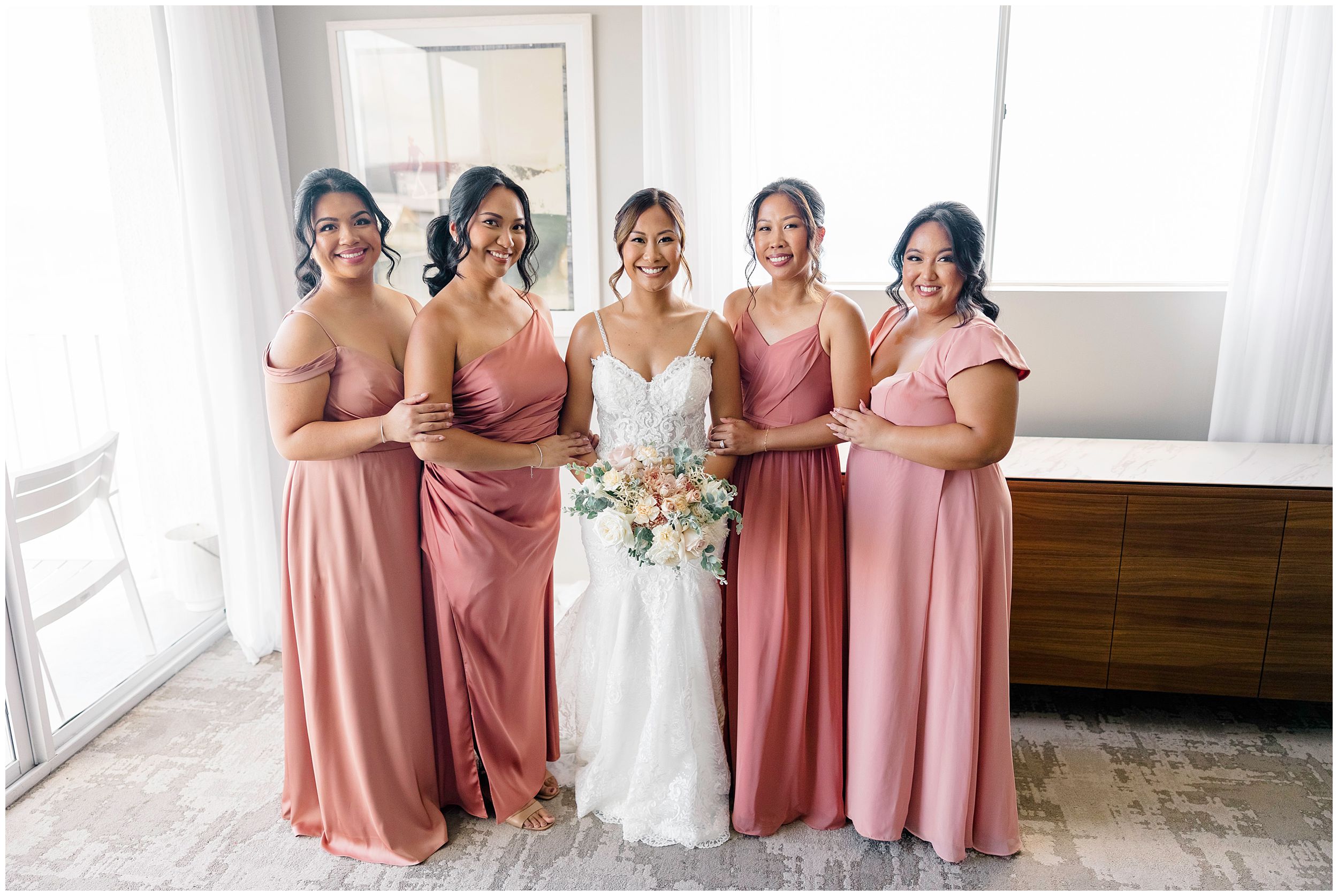
Clean natural light allows moments like getting into your dress, final touches, and portraits to happen in one consistent area without needing to relocate. When that light exists in the room itself, fewer adjustments are needed and the getting ready portion of the day stays more contained.
When a room does not have enough natural light, it does not mean the space will not work. It simply means certain moments may need to happen in a nearby area with better light. This could be another room, a hallway, a balcony, or another location within the property that has large windows and even light.
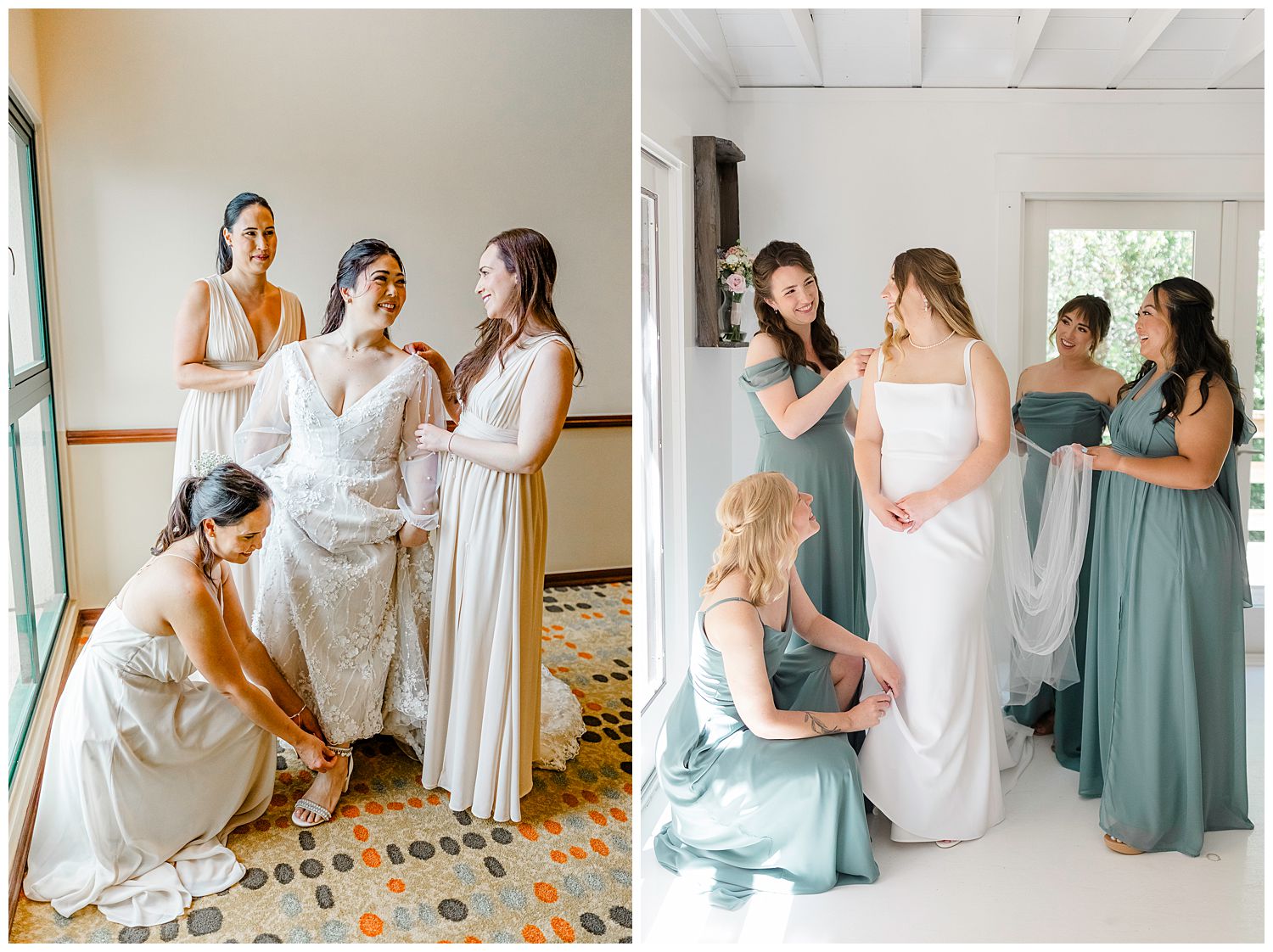
Another factor to be aware of is mixed lighting. Overhead lights combined with natural light can create inconsistent color and less flattering skin tones. When possible, clean natural light without overhead lighting allows for more accurate skin tones and a more cohesive look throughout the getting ready images.
The goal is not perfection. The goal is understanding where the best light is and being open to using that space when it makes sense. These decisions are often made on the wedding day, once the actual lighting and layout can be evaluated in person.
Below is an example of how overhead lighting compared to clean natural light can affect how natural the skin tones appear in editing.
Plan for Flexibility on the Wedding Morning
Even with thoughtful planning, final decisions about where certain moments take place are often made on the wedding day itself. This is normal and expected, especially when balancing space, light, and logistics.
Sometimes the room that works best for hair and makeup also has great natural light, allowing most of the getting ready moments to happen in one place. Other times, the space works well for logistics but not for lighting, which means certain moments may shift to a nearby area with better light.
This can look like:
- Moving to a window-rich area for getting dressed or final touches
- Using a hallway, balcony, or common space with cleaner natural light
- Rearranging furniture slightly to open up the brightest part of the room
These adjustments are not last-minute changes or signs that something went wrong. They are intentional decisions made once the actual light and layout can be evaluated in person.
Planning for flexibility ahead of time keeps the morning running smoothly. When movement between spaces is anticipated, it is built into the timeline so nothing feels rushed or disruptive. The goal is not to force every moment into a room that does not support it, but to use the best light available while keeping the experience organized and relaxed.
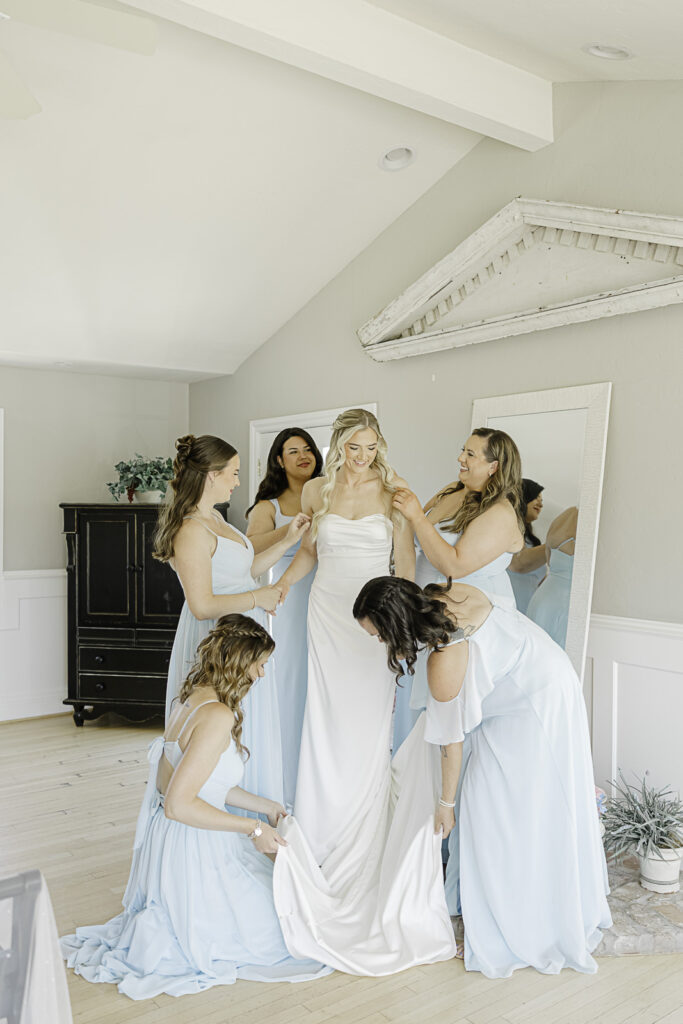
A getting ready space does not need to be perfect. It needs to provide options. When space and light are approached with flexibility, the morning stays efficient and the images from that part of the day feel cohesive and considered.
If you are still planning your wedding day logistics, you can explore more guidance like this in my wedding planning resource hub. You’ll find practical information around timelines, venue considerations, and what to expect throughout the day so you can plan with clarity and confidence.